Events
Integrative microbiome and metabolome Workshop for TINKERBELL project
About the Program
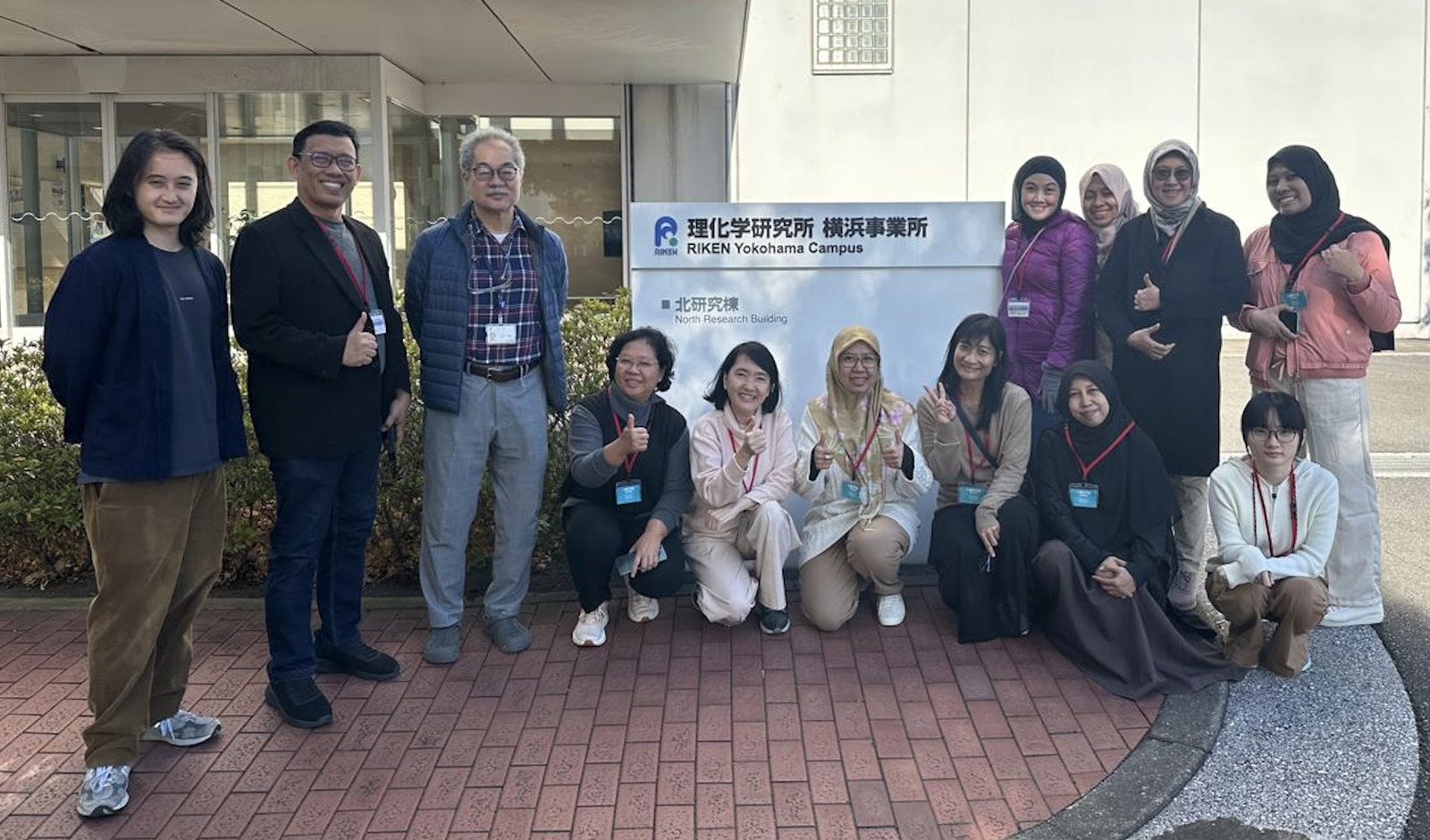
Laboratory for Intestinal Ecosystem (LIE) is engaged in a multi-year international collaborative research program with pediatricians from Hasanuddin University, Indonesia, under the ongoing TINKERBELL project. This program aims to elucidate the role of the intestinal ecosystem in malnourished children through integrative microbiome and metabolome analyses, while simultaneously fostering sustainable research capacity and human resource development through international academic exchange. As a part of this long-term collaboration, LIE hosted a three-day Indonesia–Japan Research Workshop led by Dr. Shohei Asami of LIE, at RIKEN Yokohama Campus. The primary objective of the workshop was to provide hands-on training and conceptual grounding in experimental and analytical methodologies central to the TINKERBELL project, while strengthening interpersonal and institutional ties between the participating researchers and clinicians.
The workshop was designed as an intensive, practice-oriented program targeting early- to mid-career pediatric clinicians and researchers from Hasanuddin University. The curriculum covered core experimental techniques used in microbiome and metabolome research, with a particular emphasis on reproducibility, data quality, and translational relevance to clinical research. Participants received step-by-step instruction in sample preparation workflows for 16S rRNA gene amplicon sequencing, including DNA extraction, quality control, and library preparation principles. In addition, training sessions were conducted on gas chromatography mass spectrometry-based metabolome analysis, focusing on sample derivatization, analytical considerations, and interpretation of metabolite profiles relevant to the intestinal function and pediatric disease. To complement the experimental components, the workshop also included practical training in statistical analysis using the R programming language. These sessions introduced participants to data preprocessing, visualization, and basic multivariate analyses commonly applied in microbiome and metabolome studies. Emphasis was placed on enabling participants to independently explore and interpret their own datasets generated within the TINKERBELL project.
Beyond technical skill development, the workshop served as an important platform for academic and cultural exchange. Through close interaction during laboratory sessions, seminars, and informal discussions, participants from both institutions were able to deepen mutual understanding of their respective research environments, clinical challenges, and scientific perspectives. These interpersonal relationships are recognized as a critical foundation for effective long-term international collaboration. The workshop strengthened alignment between experimental design, clinical context, and analytical strategy within the TINKERBELL project, contributing to improved data integration and research coherence across institutions. Moreover, it reinforced RIKEN’s commitment to capacity building and equitable international partnerships by supporting the development of independent research expertise among overseas collaborators.
The Indonesia–Japan Research Workshop represents a key milestone in the ongoing collaboration between RIKEN and Hasanuddin University. Building on the success of this initiative, future activities will continue to integrate joint training, collaborative data analysis, and reciprocal researcher exchanges. These efforts are expected to further advance scientific outcomes while sustaining the human networks essential for addressing complex challenges in pediatric intestinal ecosystem research.