Director's Report
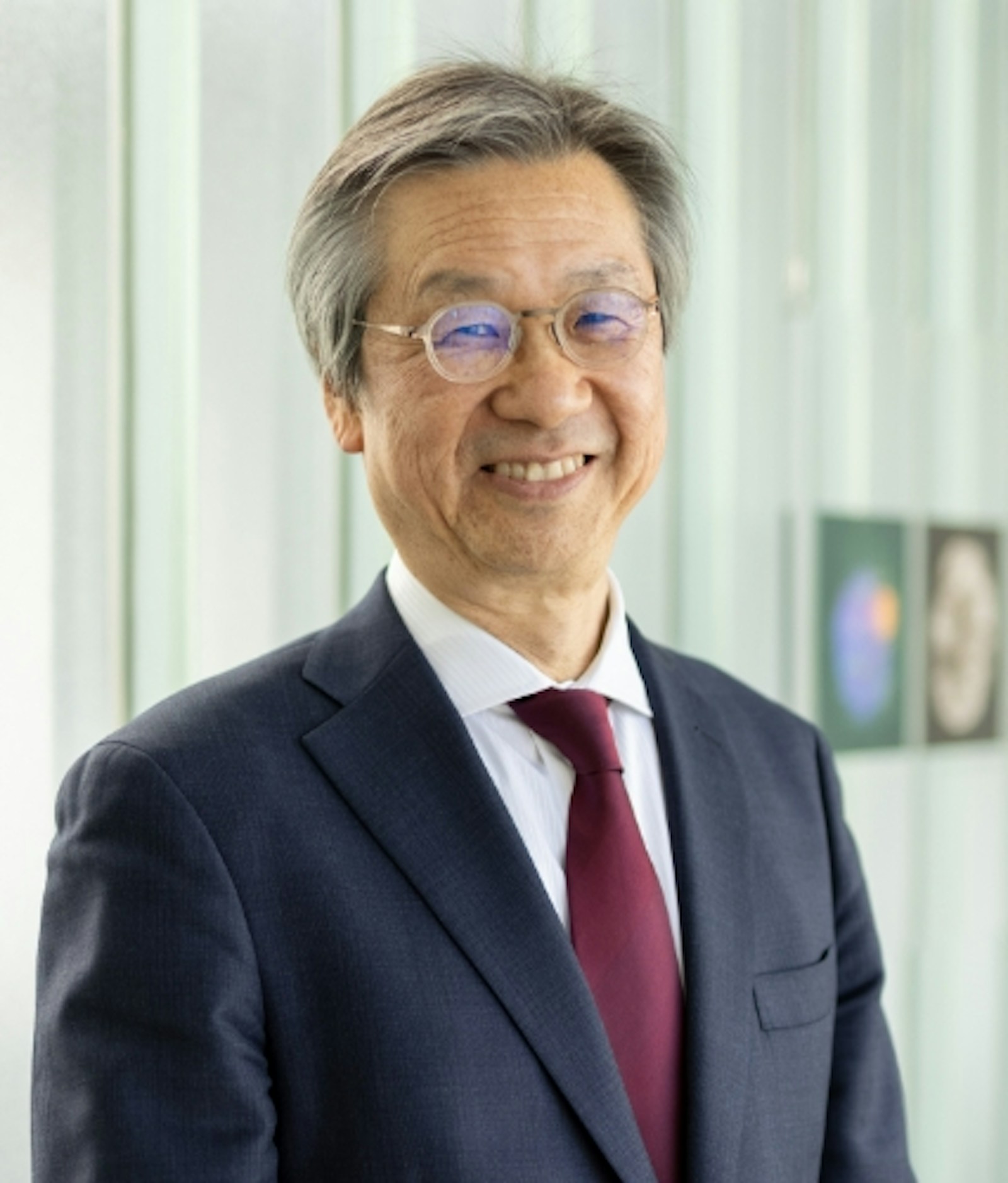
Center Director
Masayuki Amagai
The year 2025 marked a decisive starting point for the new IMS. It was the first year of RIKEN’s Fifth Mid- to Long-Term Plan, and my first year as Center Director. Keeping these aspects in mind, I approached 2025 as a year devoted to building durable foundations for the future, rather than delivering immediate outcomes.
One of the central concepts I emphasized throughout the year was “One Family.” Although begun as a Center focused on groundbreaking immunology research, IMS has become a large and highly diverse organization spanning many disciplines, professions, and career stages. To function effectively, it must operate, not as a collection of independent units, but as a single community built on trust, mutual respect, and shared responsibility. As a concrete step toward this culture, I have openly encouraged all members—regardless of role or position—to address one another using “-san” rather than the honorific “sensei.” This may seem symbolic, but language shapes mindset and behavior. While this practice has not yet fully taken root, I believe it represents an important step toward flattening unnecessary hierarchies and fostering a more open and inclusive environment consistent with the spirit of “One Family.”
In parallel, we began articulating a shared intellectual direction through the “10 Questions” initiative. These questions are not intended to constrain individual research freedom. Rather, they serve as a bottom-up framework to identify the most fundamental and ambitious challenges that IMS collectively seeks to address. By elevating individual curiosity into a set of shared questions, we aim to align scientific independence with a common sense of purpose, and to communicate clearly - to society and to ourselves - why IMS research matters.
A further major milestone in 2025 was the establishment of the “Advanced Multi-Omics Technology Platform” as a core infrastructure of IMS. This platform integrates genomics, transcriptomics, proteomics, metabolomics, spatial omics, imaging, and data science into a unified operational framework. Beyond simply consolidating technologies, it enables the continuous generation of high-quality, standardized, and interoperable data across laboratories. This integration allows complex biological phenomena to be studied in a truly data-driven and predictive manner, while also optimizing resource utilization by centralizing expertise, equipment maintenance, and strategic technology development.
Another guiding principle underlying all of these efforts was a long-term perspective: All activities at IMS are ultimately for the next generation.
The current seven-year term should be understood not as an endpoint, but as the first step toward the next seven years - and the seven years beyond that. My aim is to establish a mode of center governance that allows IMS to grow in a functional, autonomous, and sustainable manner, independent of any single individual, and capable of continuous renewal. This is in keeping with my management view that “An organization is a living organism.”
To achieve these goals, I would like to highlight three key challenges that I now strongly feel are fundamental for the future management of the center.
First, it is essential to manage the center as an integrated system by taking a comprehensive view of human resources, research infrastructure, and financial resources. Rather than addressing these elements separately, IMS must operate them in a coordinated and balanced manner so that decisions in one area reinforce, rather than constrain, the others. By doing so, we can improve operational efficiency, increase transparency in resource allocation, and continuously optimize how the center functions as a whole in support of long-term scientific excellence.
Second, it is important to clearly share the center’s overall direction with each PI, and for each laboratory, in close alignment with the center, to optimize its research activities by taking an integrated view of people, equipment, and financial resources.
Third, I believe it is increasingly important to strengthen collaboration across centers and research domains, and, as a unified RIKEN-wide effort, to build multiple points of integration between computational science, AI, and life science, thereby establishing life science systems that can be realized only at RIKEN.
Although I have been focusing on building foundations for the future, it is important and gratifying to briefly highlight some of our accomplishments this past year.
IMS investigators published 46 papers in quality journals, four of which are described in the Research Highlights section. These publications clearly illustrate the breadth and depth of the research being done at IMS, e.g., basic research into disease mechanisms that can lead to transformative therapeutic concepts; the discovery of previously unknown regulatory principles that advanced our understanding at the molecular level of how life begins; studies incorporating human global diversity into biomedical research and providing an essential foundation for precision medicine; and finally, multidisciplinary studies highlighting IMS’s strength in methodological innovation.
There were also numerous symposia and events, detailed in the Events section, several of which were international in scope and provided IMS investigators with worldwide exposure to their cutting-edge research.
In closing, 2025 was a year of preparation and alignment. By nurturing the “One Family” culture, launching the “10 Questions” framework, establishing a robust multi-omics platform, and clarifying shared responsibility for integrated resource management, we have begun constructing a foundation on which IMS can continue to evolve - organically, resiliently, and for the benefit of society and future generations of scientists.