Research Projects
Cancer Immunology
Research Overview
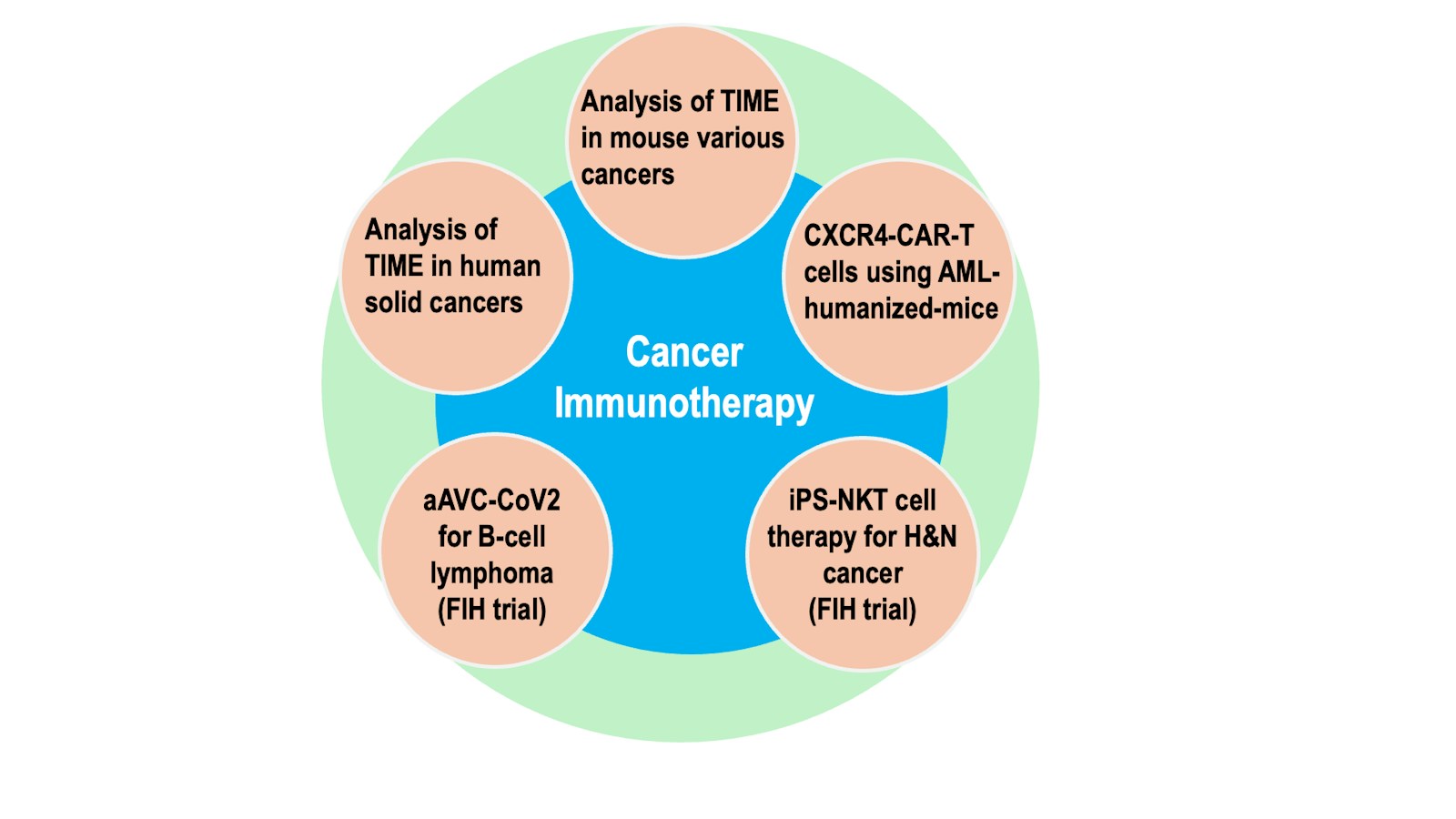
Overview of cancer immunotherapy research and development at the IMS center.
Exploratory studies in cancer immunotherapy have been conducted by multiple teams at the center, originating from analyses of various mouse cancer models and expanding into diverse research directions. In parallel, comprehensive analyses of the tumor microenvironment in human solid cancers have been advanced. In the current year, the development of novel therapeutic modalities has further progressed. Notably, the efficacy of CXCR4-CAR-T cell therapy was demonstrated using AML-humanized mouse models. In addition, first-in-human (FIH) clinical trials were conducted for aAVC therapy in B-cell lymphoma and for iPS-derived NKT cell therapy in head and neck (H&N) cancer.
The immune system recognizes tumor cells and can mediate antigen-specific tumor rejection under certain conditions; however, tumors can often evade the immune network. Understanding the tumor immune microenvironment (TIME) through both mouse and human studies will lead to a variety of approaches designed to initiate or enhance antitumor immunity (Figure). Nakagawa's team (Lab for Cancer Genomics) performed single-cell RNAseq of immune cells and spatial transcriptome analysis of liver, kidney, and pancreatic cancers to understand their tumor microenvironments and tumor cell plasticity. They also examined the association between these cell profiles and clinical phenotypes, including treatment response and patient prognosis. Ishikawa’s team (Lab for Human Disease Models) has published a paper describing engineering of human T lymphocytes with memory function in humanized mouse project. The group identified correlation between memory T cell signature and high expression of CXCR4 in T cells of patients who have achieved long-term remission. They showed CXCR4-expressing CAR-T cells could better eradicate patient leukemic cells than conventional CAR-T cells in xenograft models for acute myeloid leukemia in humanized mouse model. Fujii’s group (Lab for Immunotherapy) has advanced their aAVC based projects to establish new immunotherapies. In the current year, a clinical trial for aAVC-CoV-2 has been launched, specifically targeting patients with B cell malignancies who remain at high risk of COVID-19 due to impaired immune functions. Furthermore, Koseki’s group (Laboratory for Developmental Genetics) has published results from a Phase I clinical trial of iPS cell–derived NKT (iPS-NKT) cells in patients with head and neck cancer (Figure). A Phase I clinical study evaluating combination therapy with iPS-NKT cells and dendritic cells is ongoing. In parallel, preclinical studies for CAR-bearing iPS-NKT cells are in progress.
Thus, the groups in cancer immunology are investigating the target molecules and cells and developing disease stratification systems and new treatment strategies.