Lab Activities
Laboratory for Innate Immune Systems
Research Activities
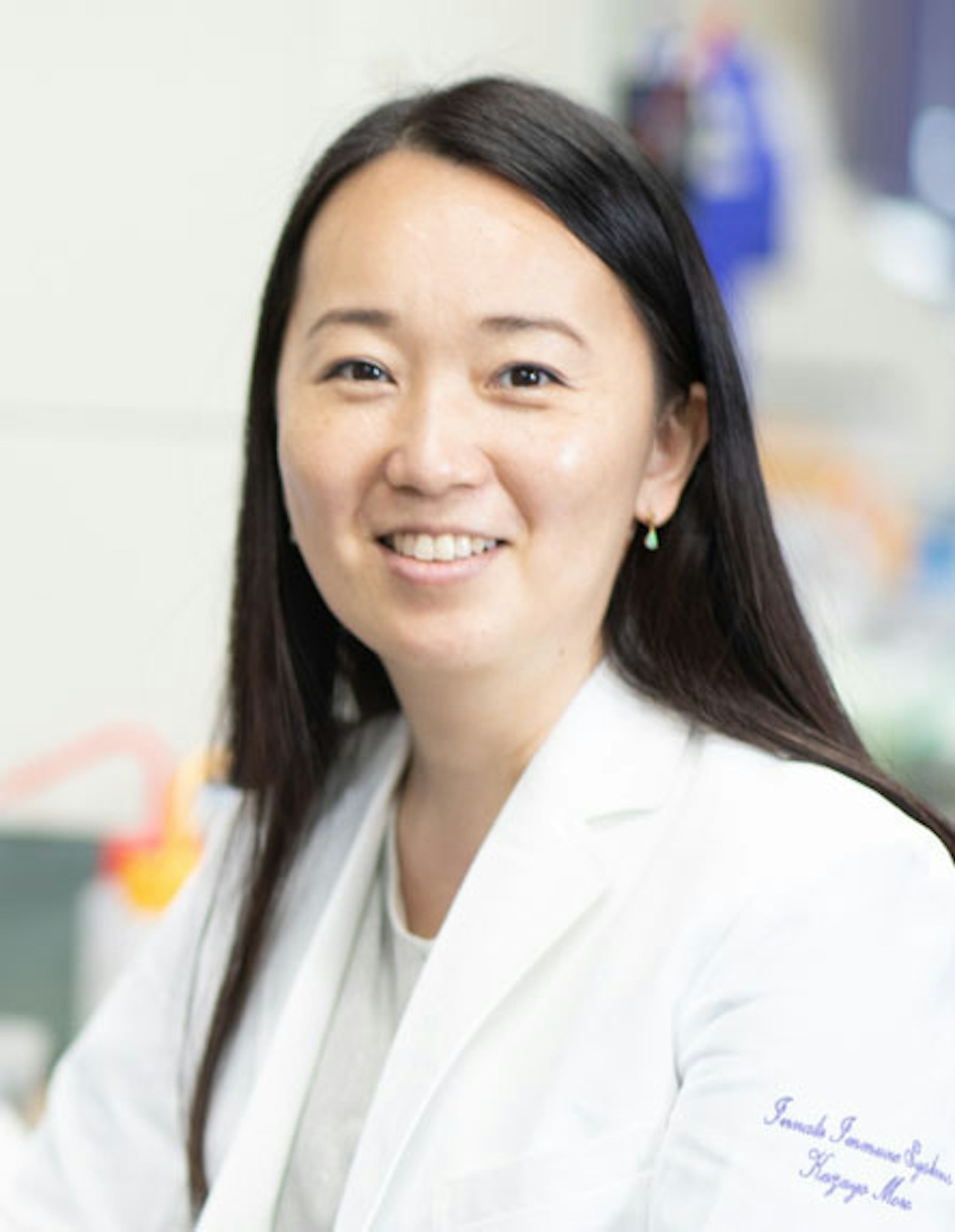
Team Director
Kazuyo Moro
Over the past year, our laboratory has investigated how innate lymphoid cells (ILCs) orchestrate tissue homeostasis and disease progression through dynamic interactions with stromal, epithelial, and metabolic systems.
In the context of endometriosis, a chronic inflammatory disorder of reproductive-age women, we identified group 2 innate lymphoid cells (ILC2s) as key drivers of lesion growth. Using murine models, we demonstrated that immune cells within endometriotic lesions originate from host tissues rather than transplanted endometrial fragments. We further uncovered a pathogenic feedback loop in which Sca-1⁺ fibroblasts serve as a dominant source of IL-33, inducing amphiregulin (AREG) production by infiltrating ILC2s. ILC2-derived AREG, in turn, stimulates fibroblast proliferation, promoting lesion enlargement. These findings reveal a previously unrecognized ILC2–fibroblast axis and highlight IL-33–AREG signaling as a potential therapeutic target in endometriosis.
In the skin, we uncovered a mechanosensory immune circuit that maintains epithelial turnover under physiological mechanical stress. Mild perturbation of the stratum corneum induces keratinocyte-derived extracellular ATP, which activates skin-resident ILC1s via the high-affinity receptor P2RX1, leading to AREG production. This pathway enhances basal cell proliferation, differentiation, and stratum corneum shedding, thereby facilitating the clearance of microbes and allergens. Disruption of this axis compromises barrier resilience and promotes atopic-like inflammation.
We also explored the role of ILC3s in metabolic regulation, demonstrating that feeding-induced activation of intestinal ILC3s drives VEGF-A–dependent modulation of capillary permeability, enabling portal lipid transport. This pathway links immune sensing to systemic lipid metabolism, obesity resistance, and fasting-induced ketogenesis.
Finally, using a cecal resection model of ulcerative colitis, we identified an appendix–microbiota–tuft cell axis in which microbiota-derived oxidized lipids induce tuft cell hyperplasia, IL-25–ILC2 activation, and IL-13–dependent mucus production, collectively strengthening epithelial barrier function and protecting against colitis.
Together, our work reveals fundamental principles by which ILCs integrate mechanical, microbial, and metabolic cues to regulate tissue health and disease.
ILC2–Fibroblast axis drives endometriosis progression
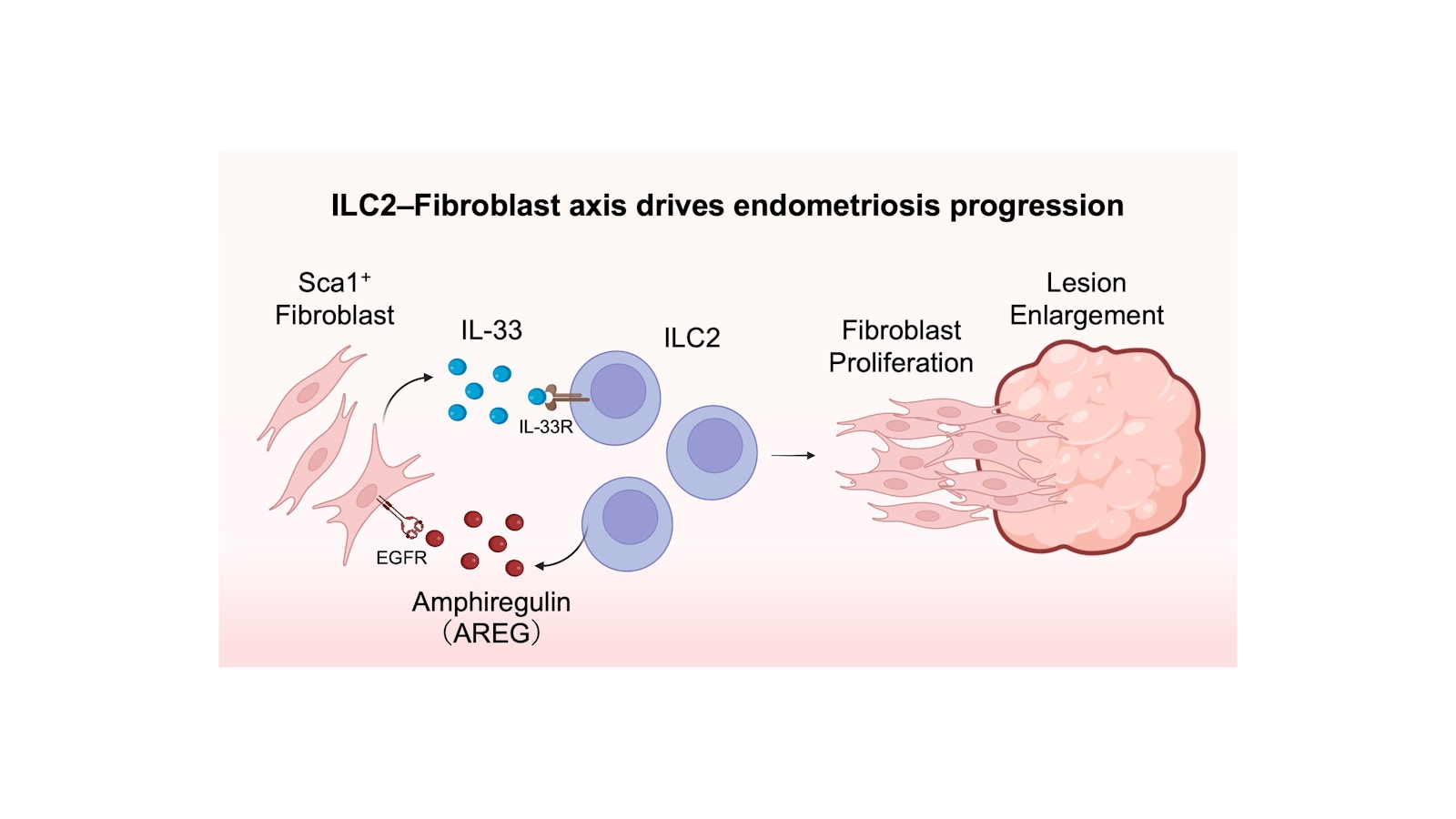
In endometriosis, we demonstrated that the enlargement of endometrial lesions is driven by a positive activation loop in which IL-33 produced by Sca-1+ fibroblasts activates ILC2s, inducing amphiregulin production, which in turn promotes fibroblast proliferation.
Recent Major Publications
Matsuda M, Fujiwara Y, Yonezawa F, Matsuo K, Ishizu E, Shimora H, Shimizu S, Kitatani K, Kaibori Y, Yamagishi N, Yashiro T, Moro K, Kawakami R, Mikami N, Sakaguchi S, Nabe T. Cyclin-dependent kinase (CDK) 8 and its paralog CDK19 develop group 2 innate lymphoid cell-related lung fibrosis by activating STAT5. J Immunol 214(12):3238-3249 (2025)
Invited Presentations
Moro K. Cecal resection-driven gut microbiota dynamics alleviate ulcerative colitis. Korea-China-Japan Immunology Forum in the 2025 KAI Spring Conference, Seoul, Korea, April 10–11 (2025)
Moro K. ILC2-mediated mechanism of ulcerative colitis suppression following cecal resection. Cold Spring Harbor-Asiaconference on Infection, Inflammation and Cancer, Suzhou, China, May 5–9 (2025)
Moro K. Cecal Resection-Induced Eubiosis Suppresses Ulcerative Colitis via Tuft Cells. The 3rd International Conference "Food, Microbiota and Immunity", Prague, Czech Republic, June 16–19 (2025)
Moro K. Cecal Resection Suppresses Ulcerative Colitis via an ILC2- Dependent. 2025 International Conference of Physiological Sciences (ICPS2025), Hangzhou, China, October 9–12 (2025)
Moro K. Therapeutic potential of targeting ILC2s in allergic diseases. The 54th Annual Meeting of the Japanese Society for Immunology, Himeji, Japan, December 10–12 (2025)