Lab Activities
Laboratory for Human Disease Models
Research Activities
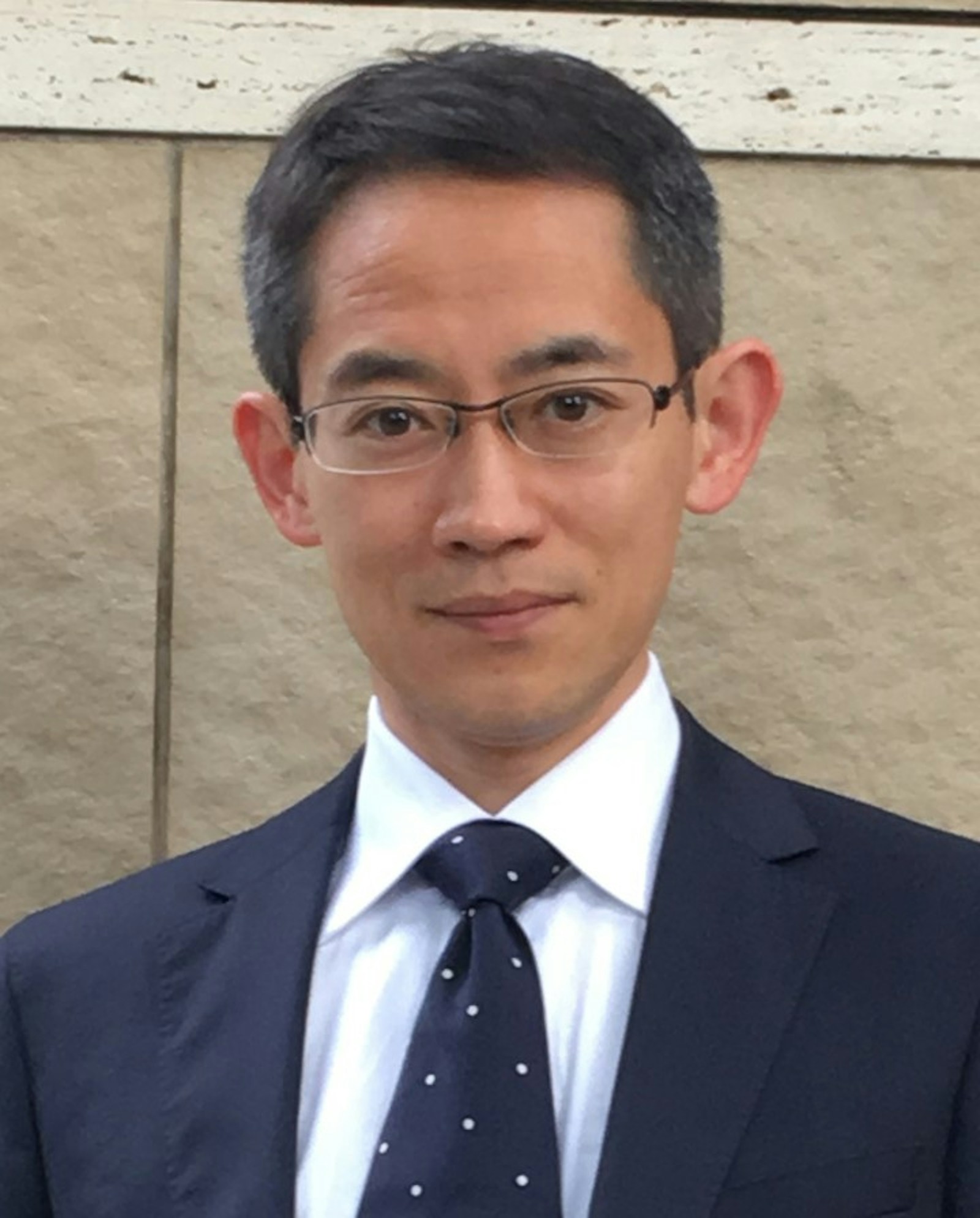
Team Director
Fumihiko Ishikawa
Since we started up our lab in 2006, we aimed to achieve the followings: 1. Through understanding how human HSCs generate diverse blood and immune cells and which genes define robustness of hematopoietic stemness, we want to make allogeneic stem cell transplantation safer in the future. 2. Unlike genetically-engineered mouse models, patient leukemias are so heterogenous in genetics, treatment response and clinical outcome. We therefore sought to recapitulate patient disease using patient cells, and then connect genetic and transcriptomic heterogeneity with cellular dynamics and function. 3. Key to suppress tumor cell activity should be immunity. We want to understand “memory” or “longevity” of human immunity and engineer immune cells as a new and curative treatment for eliminating leukemia with genetic complexity and clinical aggressiveness.
This year, our effort finding CXCR4 as a critical molecule structuring immune cell memory in T cells has been accepted (Nature Communications, in press). In the work, by analyzing T cell proteomic profiles of patients with long-term remission after stem cell transplantation, we found correlation between immune cell memory signature and high expression of CXCR4. At the same time, we focused on two cell surface antigens, CD25 and CD96, as therapeutic targets on surface of leukemic cells. By making antibodies for the two antigens, we established CXCR4-expressing CAR-T cells targeting those antigens. With engineering CXCR4 expression, CAR-T cells could better eradicate leukemic cells in peripheral blood, bone marrow and spleen of patient-derived xenograft models compared with conventional/CXCR4(-) CAR-T cells. By scRNAseq and proteome/CyTOF analyses, we found that CXCR4-expressing CAR-T cells could achieve memory status. We are now examining the engineering of CXCR4 expression in CAR-T cells can also be applied for treatment against acute lymphoblastic leukemia of T and B cell lineages.
Understanding longevity and robustness of human immune cells
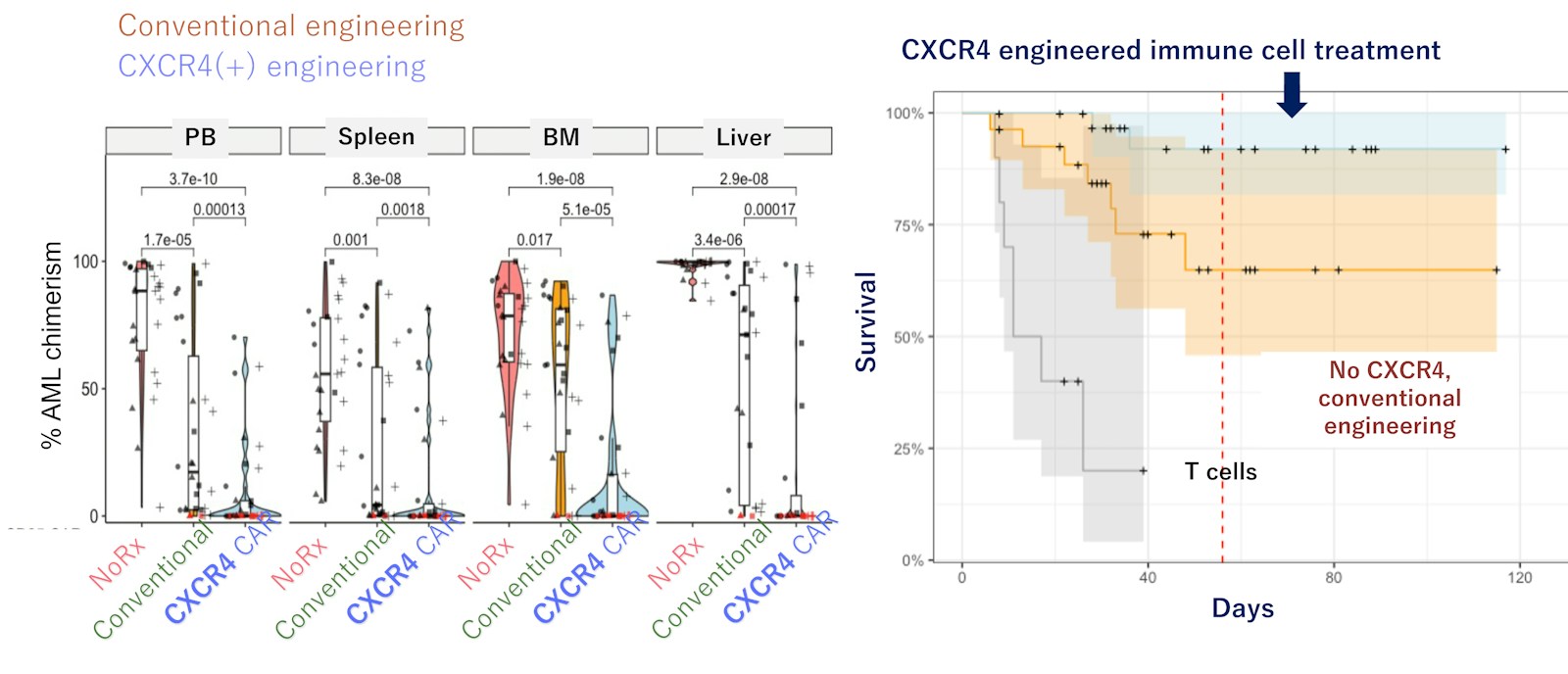
(Left) We performed in vivo injection of CAR-T cells with or without expression of CXCR4 using xenograft models for acute myeloid leukemia. In all organs examined, we found better elimination of leukemic cells by CXCR4-expressing CAR-T cells than conventional CAR-T cells. (Right) Consistent with the results from AML cell elimination in organs, PDX mice could survive longer in CXCR4-expressing CAR-T cell treatment as compared with conventional CAR-T cell treatment or non-engineered CAR-T cells.
Recent Major Publications
Zang W, Koike Y, Nishimura K, Tanaka A, Yamazaki H, Yamasaki T, Ito H, Zhang Y, Aoyama Y, Saika W, Xiao M, Hasegawa C, Kunimoto H, Nakajima H, Ishikawa F, Takaori-Kondo A, Inoue D. BRD4 and MYB inhibition overcomes venetoclax resistance in EVI1-rearranged acute myeloid leukemia. Sci Rep 15(1), 37099 (2025)
van Amerongen RA, Tuit S, Remst DF, Wouters AK, Siekman SL, Hagedoorn RS, van der Steen DM, Kester MG, de Ru AH, van der Horst G, Matsuda M, Ishikawa F, van Veelen PA, Falkenburg JH, Heemskerk MH. TCR-Based Therapy Directed against Kallikrein-Related Peptidase 4 Is Safe and Effective against Prostate Cancer.. Cancer Immunol Res 13(8), 1145–1159 (2025)
Saumya A, Kanamaru E, Saito Y, Ishikawa F, De Hoon MJ. Cell type-dependent directional transcription at enhancers.NAR Genom Bioinform(1), lqaf007 (2025)
Invited Presentations
Itoh AN, Fumihiko I. CXCR4-Driven Memory and Oxidative Metabolism in CAR-T Cells Enhances AML Eradication in the Hypoxic Bone Marrow. The 48th Annual Meeting of the Molecular Biology Society of Japan, Yokohama, Japan, December 3–5 (2025)
Ishikawa F. Creating therapeutic strategies targeting genetically complex leukemia. ISREC, Lausanne, Switzerland, September 1–4 (2025)
Ishikawa F. New Endeavor through Cross-disciplinary Effort. ASPIRE FORUM 2025, Hong Kong, China, July 7-11 (2025)
Pack JP, Ishikawa F, Saito Y, Huang S. Exploring targetable pathways of malignancy in NHL using primary cells and functional genetic screening. RIKEN-McGill workshop, Montreal, Canada, July 7–8 (2025)